The celebration of Lent evolved gradually from early Christian practices, shaped by Scripture, worship habits, and Church decisions over the first few centuries. What began as a short period of fasting eventually developed into a profound season of spiritual preparation observed throughout the Christian world.
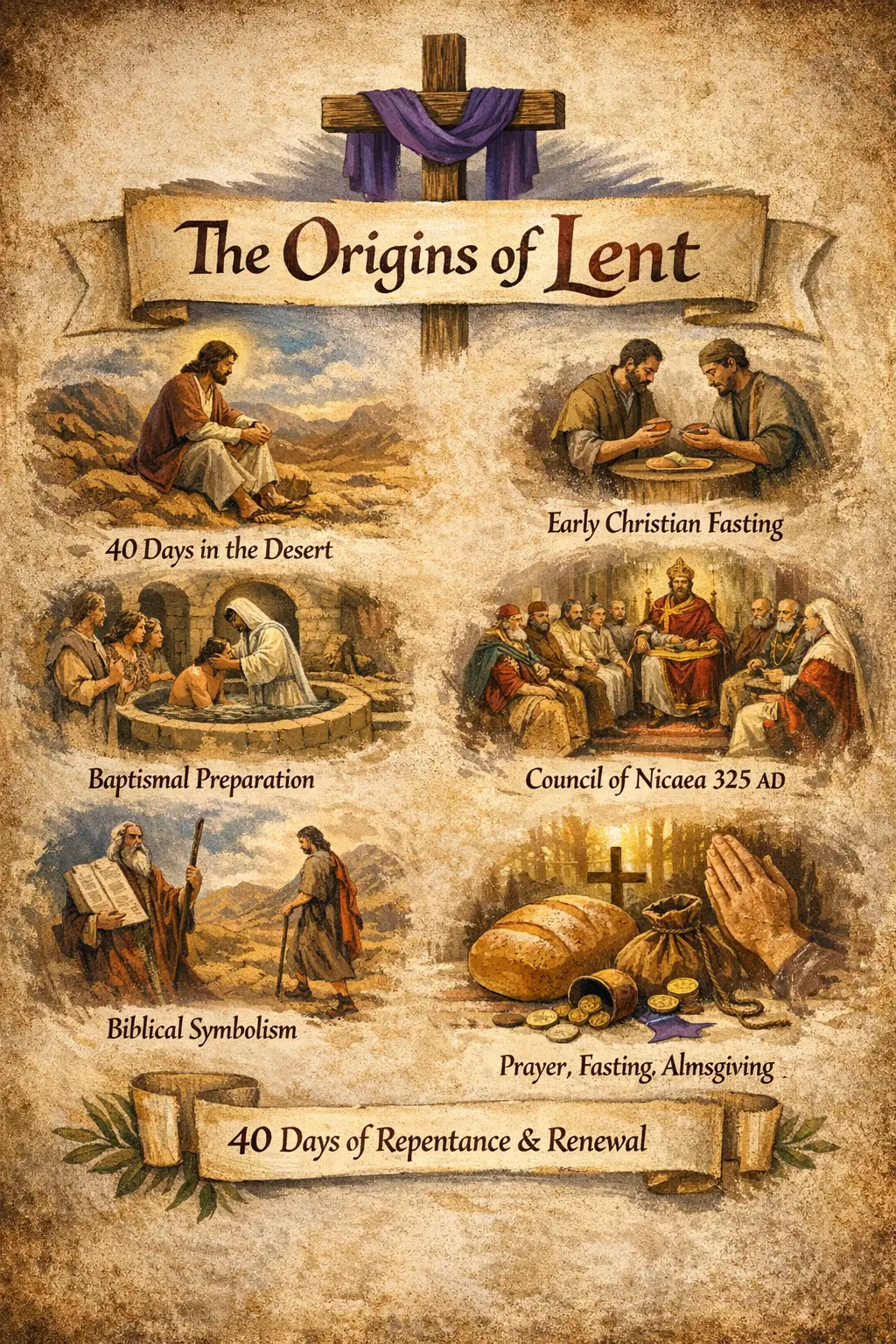
1. Roots in the life of Jesus Christ
Lent is inspired by Jesus’ forty days of fasting and prayer in the desert before the beginning of his public ministry. Early Christians viewed this period as a model of spiritual preparation, self-denial, and trust in God. Jesus’ withdrawal into the wilderness became the foundation for later practices of fasting and reflection.
2. Early Christian fasting practices (1st–3rd centuries)
The earliest Christians fasted in preparation for Easter, but initially, this fast lasted only one or two days, commemorating the time Jesus spent in the tomb. Over time, fasting expanded to a longer period—eventually about a week—particularly in communities preparing new converts for baptism.
3. Lent and baptismal preparation
By the third century, Lent became closely associated with catechumens, those preparing to be baptized at Easter. These candidates devoted themselves to fasting, prayer, repentance, and the study of Scripture. Gradually, the entire Christian community joined them in this preparation, transforming Lent into a season of renewal for all believers.
4. Formal recognition by the Church (4th century)
After Christianity was legalized under Constantine the Great, Christian practices became more unified across the Roman Empire.
The Council of Nicaea (AD 325) makes reference to a forty-day Lenten season, confirming that Lent was already widely observed throughout the Church.
5. Why forty days?
The number forty carries deep biblical significance:
- Moses fasted forty days on Mount Sinai
- Elijah journeyed forty days to Mount Horeb
- Jesus fasted forty days in the wilderness
These examples reinforced Lent as a time of testing, repentance, and spiritual transformation.
6. From strict fasting to spiritual discipline
In the early Church, Lenten fasting was severe—often limited to one simple meal a day, with the avoidance of meat and dairy. Over the centuries, these practices evolved. While fasting remained important, greater emphasis was placed on:
- Prayer
- Almsgiving
- Self-denial
- Personal repentance and conversion
In summary
Lent began as a brief fast preceding Easter, evolved into forty days of preparation for baptism, and ultimately became a universal season of spiritual renewal for Christians. Rooted in the example of Jesus and shaped by early Church tradition, Lent continues to invite believers into deeper reflection, repentance, and hope.
Discover more from Stories, Flowers and Books
Subscribe to get the latest posts sent to your email.
 using WordPress and
No responses yet