Palm Sunday is a deeply symbolic Christian holy day that marks the beginning of Holy Week, the final week of Lent, and the days leading up to Easter.
🌿 What Palm Sunday Means
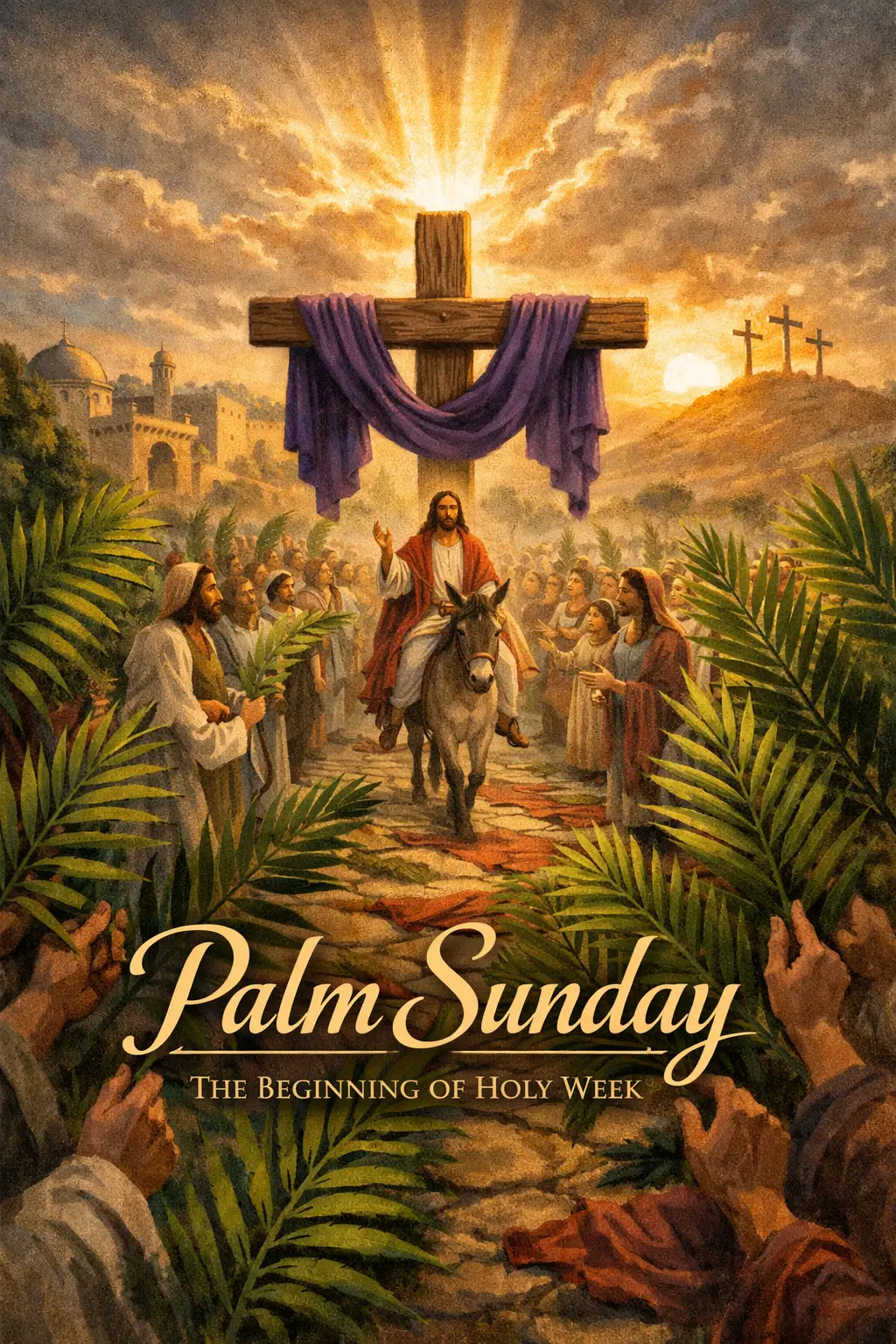
Palm Sunday commemorates **Jesus Christ’s triumphal entry into Jerusalem, just days before his crucifixion.
According to the Gospels:
- Jesus entered Jerusalem riding on a donkey, fulfilling an ancient prophecy about a humble king.
- Crowds welcomed him by waving palm branches and spreading cloaks on the road.
- They shouted “Hosanna!”—a word meaning “Save us!”
The scene is joyful, but it also carries tension: the same city that welcomes Jesus as king will soon reject him.
📜 Biblical Origins
Palm Sunday is described in all four Gospels:
- Gospel of Matthew 21
- Gospel of Mark 11
- Gospel of Luke 19
- Gospel of John 12 (which explicitly mentions palm branches)
Palm branches were a symbol of victory, peace, and kingship in Jewish culture—used to honor liberators and righteous leaders.
✝️ How the Church Observes It
Traditionally, Palm Sunday includes:
- Blessing of palms (or olive branches in some countries)
- Processions, reenacting Jesus’ entry into Jerusalem
- A reading of the Passion narrative, foreshadowing Good Friday
Many churches later burn the blessed palms to create ashes for Ash Wednesday the following year—a beautiful full-circle symbol.
🌱The More profound Message
Palm Sunday holds a powerful contrast:
- Joy and praise → suffering and sacrifice
- Human expectations → God’s plan
- A reminder that faith is not only a celebration, but a commitment
It invites believers—young and old—to ask:
What king am I welcoming into my life?
Discover more from Stories, Flowers and Books
Subscribe to get the latest posts sent to your email.
No responses yet